Pinnacle@Duxton 4-room flat fetches record S$1.588 million
The 95 sq m sale reached about S$1,553 psf, but valuation, CPF refunds and usable proceeds remain separate sums.
Published 2026-10-09 · 5 min read
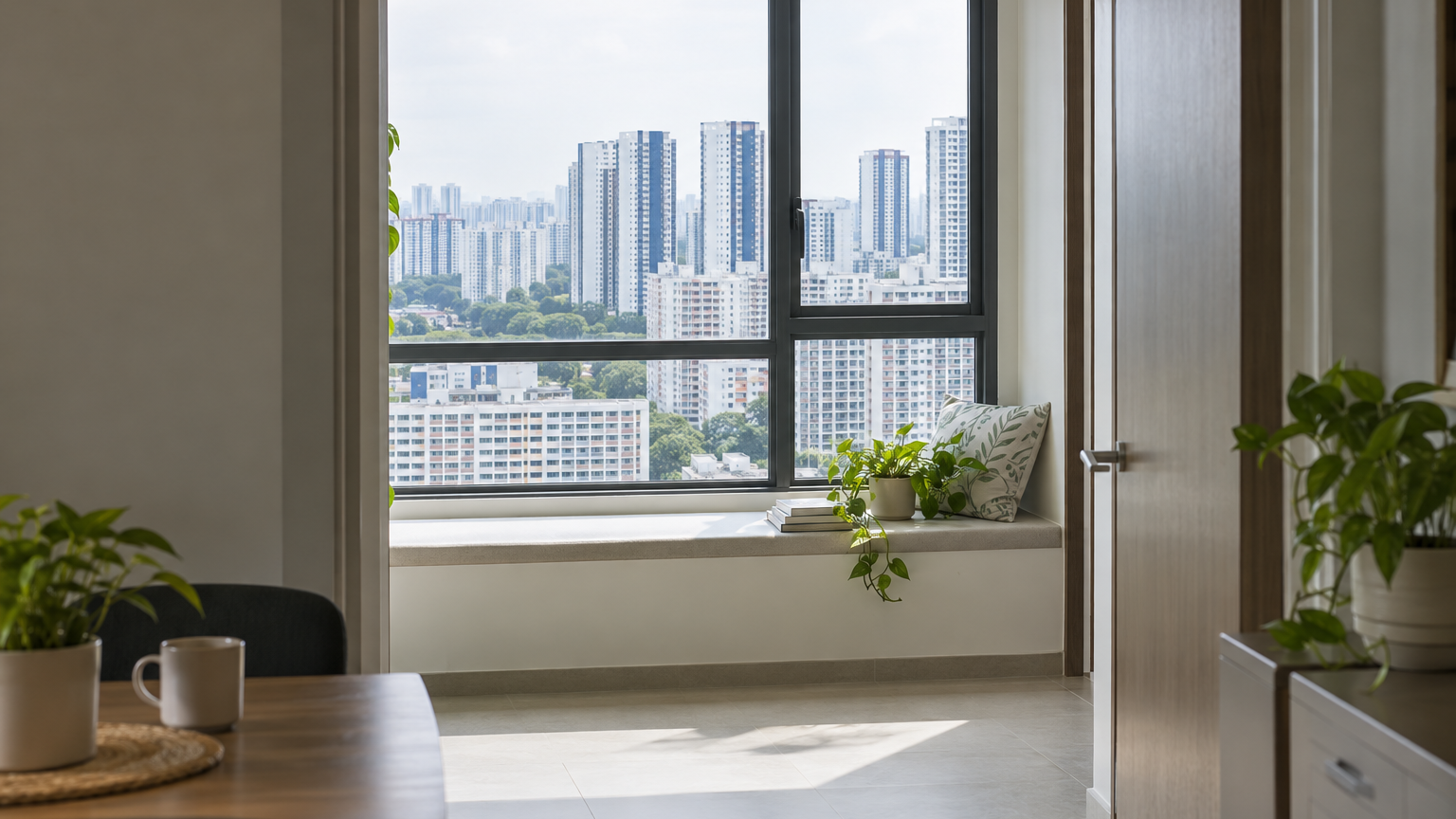
A 95 sq m 4-room flat at Block 1A Cantonment Road reportedly changed hands for S$1.588 million in October 2026. The Pinnacle@Duxton unit was on the 28th to 30th storeys, yet it set reported national records for both the sale price and price per square foot of a 4-room HDB resale flat.[S1][S2]
That is striking even by Pinnacle standards. But the record describes one completed deal—not the official valuation of every nearby flat or the amount its seller could take to the next home.
A record from below the highest floors
The reported price works out to approximately S$1,553 per sq ft (psf) after converting 95 sq m to about 1,023 sq ft. This is an arithmetic calculation based on the reported price and floor area, not an official HDB valuation.[S1][S2]
The previous reported 4-room record was S$1.55 million for a 96 sq m unit at Block 1C Cantonment Road in May 2026. That flat was on the 40th to 42nd storeys. The latest deal was S$38,000 higher, an increase of about 2.5%, despite coming from a floor band more than 10 storeys lower.[S1]
The comparison is interesting, but incomplete. The available transaction data does not identify the buyer or seller, or disclose the unit’s condition, facing and renovation. Owners therefore should not simply multiply their floor area by S$1,553 psf and call the result a valuation.
The agreed price and HDB’s value are different figures
For an HDB resale purchase, buyer and seller first agree on a price and complete the Option to Purchase process. The buyer may then submit a Request for Value within the prescribed stage of that process.[S3]
If the agreed price exceeds HDB’s value, the difference is known as cash over valuation, or COV. That portion cannot be covered by CPF savings or an HDB housing loan, so the buyer must fund it with cash.[S3]
Here is a purely indicative example: if a flat costs S$1.588 million but is valued at S$1.50 million, the COV would be S$88,000. This does not suggest that HDB assigned either figure to the Pinnacle unit; its transaction-specific value has not been published.
The flat’s lease reportedly began in 2011, leaving roughly 84 years in October 2026. Remaining lease matters because HDB loan and CPF-use rules also take account of the age of the youngest core household member. Buyers need their own assessment rather than relying on the latest deal in the block.[S1][S4]
An HDB Flat Eligibility letter, better known as an HFE letter, brings the household-specific checks together. It sets out eligibility to buy a flat, receive applicable CPF housing grants and take an HDB housing loan.[S4]
The seller does not pocket S$1.588 million
A completed sale price is only the top line. The outstanding housing loan must be settled, while CPF principal used for the home and the accrued interest it would have earned generally have to be returned to the seller’s CPF account. Housing grants used for the property are also included in the required CPF housing refund.[S5]
A useful planning sequence is:
- Start with the completed sale price.
- Pay off the outstanding housing loan.
- Account for the required CPF housing refund.
- Deduct legal, marketing and other transaction costs.
- Separate the remaining cash from CPF funds available for the next purchase.
The transaction price alone cannot reveal the answer. Sellers need their loan-redemption figure and the housing refund shown in their CPF Home Ownership Dashboard to estimate their usable proceeds properly.[S5]
Age can change the flow of the refund too. For a seller aged 55 or older, refunded CPF savings may first be used to meet the required retirement sum in the Retirement Account. That means a large sale price need not translate into an equally large cash balance.[S5]
Check MOP and move timing before committing
The Minimum Occupation Period (MOP) is the period during which an owner must physically occupy the flat before it can generally be sold. A transaction headline does not establish another household’s MOP status or eligibility for its intended next purchase; those checks must be completed under the applicable resale conditions.[S6]
Timing matters because sellers may need their sale proceeds and CPF refund to fund the next home. Completion dates, temporary accommodation and renovation payments can create a cash-flow gap even when the existing flat sells for a substantial sum.
For an eligible second HDB housing loan, HDB generally requires the household to use the CPF refund and up to 50% of the cash proceeds from the current or previous property before determining the loan amount. That can leave less immediately available for renovation and moving costs than the headline sale price suggests.[S4]
The record is still remarkable: a 4-room flat on the 28th to 30th storeys reportedly sold for more than an earlier benchmark from above the 40th floor. Its practical lesson, however, is simple. Sale price, HDB value and usable sale proceeds are three different numbers—and a household planning its next move needs to work out all three separately.
Sources
- Pinnacle@Duxton 4-room record at S$1.588 million · 99.co
- Sales proceeds after selling your home · Central Provident Fund Board
- The Pinnacle@Duxton 4-room transaction listing · HousePrice.sg
- Mode of financing for a resale flat · Housing & Development Board
- Option to Purchase: Important Notes · Housing & Development Board
- Terms and Conditions for Purchase and Sale of an HDB Resale Flat · Housing & Development Board