Boon Keng five-room flat sets $1.64 million town record
The high-floor DBSS sale beat the previous Kallang/Whampoa five-room mark by $51,112—but its price is not the seller’s take-home cash or a valuation for neighbouring flats.
Published 2026-10-16 · 5 min read
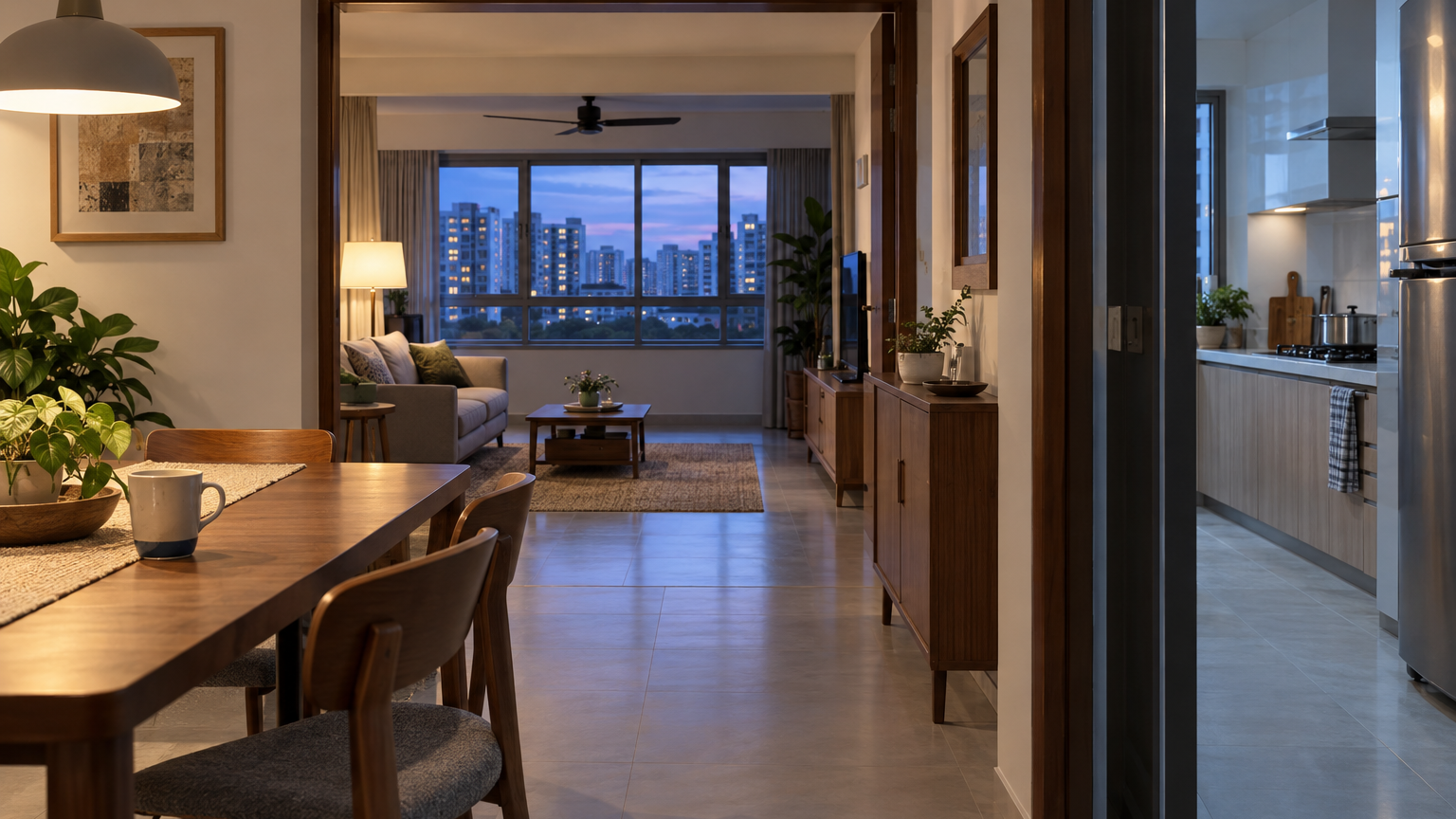
A five-room HDB flat at Block 9 Boon Keng Road changed hands for $1.64 million, setting a new five-room resale record for Kallang/Whampoa. The 117 sq m flat sits within the 34th-to-36th-storey band and was registered in October 2026.
The eye-catching price matters, but not because every nearby flat suddenly has the same value. It is one completed resale with a particular floor level, size, lease and development type. For buyers and sellers planning their own move, the more useful story is the gap between a headline price and the household-level figures that eventually matter: valuation, financing, CPF refunds and cash proceeds.
What was sold for $1.64 million
The flat is in City View @ Boon Keng, a Design, Build and Sell Scheme, or DBSS, development. DBSS flats were built and sold under a scheme involving private developers, but they remain HDB flats and are subject to HDB resale and ownership rules rather than private-condominium rules.
HDB’s transaction record describes the unit as a 117 sq m five-room flat, equivalent to roughly 1,259 sq ft, with a lease that began in 2011. Its published remaining lease at the point of registration was about 83 years and four months.
The previous Kallang/Whampoa five-room high was $1,588,888, recorded for a 116 sq m Premium Apartment at Block 8A Upper Boon Keng Road in September 2026. The new price is $51,112 higher, an increase of about 3.2% by HDB Navigator’s calculation.
That comparison is useful because it shows the size of the step up: meaningful, but far smaller than the seven-figure headline might suggest. It also keeps the record precise. This is a five-room record for Kallang/Whampoa, not a claim about every flat type in the town.
A resale price is not an HDB valuation
HDB’s public dataset records registered resale transactions and describes its prices as indicative because individual flats differ in location, floor level, age, condition and other features. It does not publish the identities of the buyer and seller, why they agreed on this price or the valuation used for financing.
That distinction matters when a buyer is working out the cash needed. The agreed price and HDB’s valuation are separate figures; if the price exceeds the valuation, the difference can affect how much cash the buyer must provide. Nothing in the public transaction record reveals whether that happened here or how the purchase was financed.
The remaining lease also cannot be assessed in isolation. CPF usage and loan arrangements depend on the buyer’s circumstances as well as the flat, so another household should not treat this transaction as an automatic financing precedent.
Before a resale buyer obtains an Option to Purchase, the buyer generally needs a valid HDB Flat Eligibility letter. Commonly called the HFE letter, it sets out the household’s eligibility to buy a flat, receive applicable grants and take an HDB housing loan. It is a household-specific assessment—not a conclusion that can be drawn from this sale price.
The seller does not simply pocket $1.64 million
For the seller, $1.64 million is the transaction price, not necessarily cash available for the next home. HDB’s sale-proceeds calculation accounts for obligations such as an outstanding housing loan and the CPF savings used for the flat, together with accrued interest that must be returned to the seller’s CPF account.
Other payable amounts may also apply depending on the household’s circumstances. Without the seller’s loan balance, CPF history and transaction costs, any estimate of the cash proceeds would be guesswork.
A simple planning equation is more honest:
Indicative cash proceeds = sale price − outstanding loan − required CPF refund − other applicable amounts.
This is only a planning framework. It is not an official calculation for this seller, and the public record supplies none of the private figures needed to complete it.
Completion, moving day and MOP may differ
Move timing is another place where one date can hide several different events. Legal completion transfers ownership, but sellers may request a temporary extension of stay if the buyers agree and HDB’s conditions are met.
The extension can last for up to three months, giving sellers more time to complete and move into their next home. Where such an extension applies, the buyers become the legal owners at completion but cannot occupy the flat until the extension ends.
For an unclassified or Standard resale flat, the usual Minimum Occupation Period, or MOP, is five years. If there is a temporary extension of stay, the buyer’s MOP starts only after the sellers move out, rather than on the legal completion date.
That can influence renovation scheduling, accommodation plans and the earliest date for a future sale. There is no public evidence that the Boon Keng parties used an extension; it is simply an important timing question for households arranging back-to-back moves.
The $1.64 million sale is remarkable because it is a verified new five-room high for the town. For anyone planning a resale, however, the record price is only the first number: the household’s valuation, HFE outcome, CPF refund, loan balance and actual move dates still determine whether the deal works.