Maju Forest and Gillman Barracks: about 1,200 fewer planned homes, about 6ha more greenery
Maju Forest and Gillman Barracks would have about 1,200 fewer planned homes under HDB’s reported revision. The public-housing component remains an estimated 9,500 homes.
Published 2026-11-03 · 4 min read
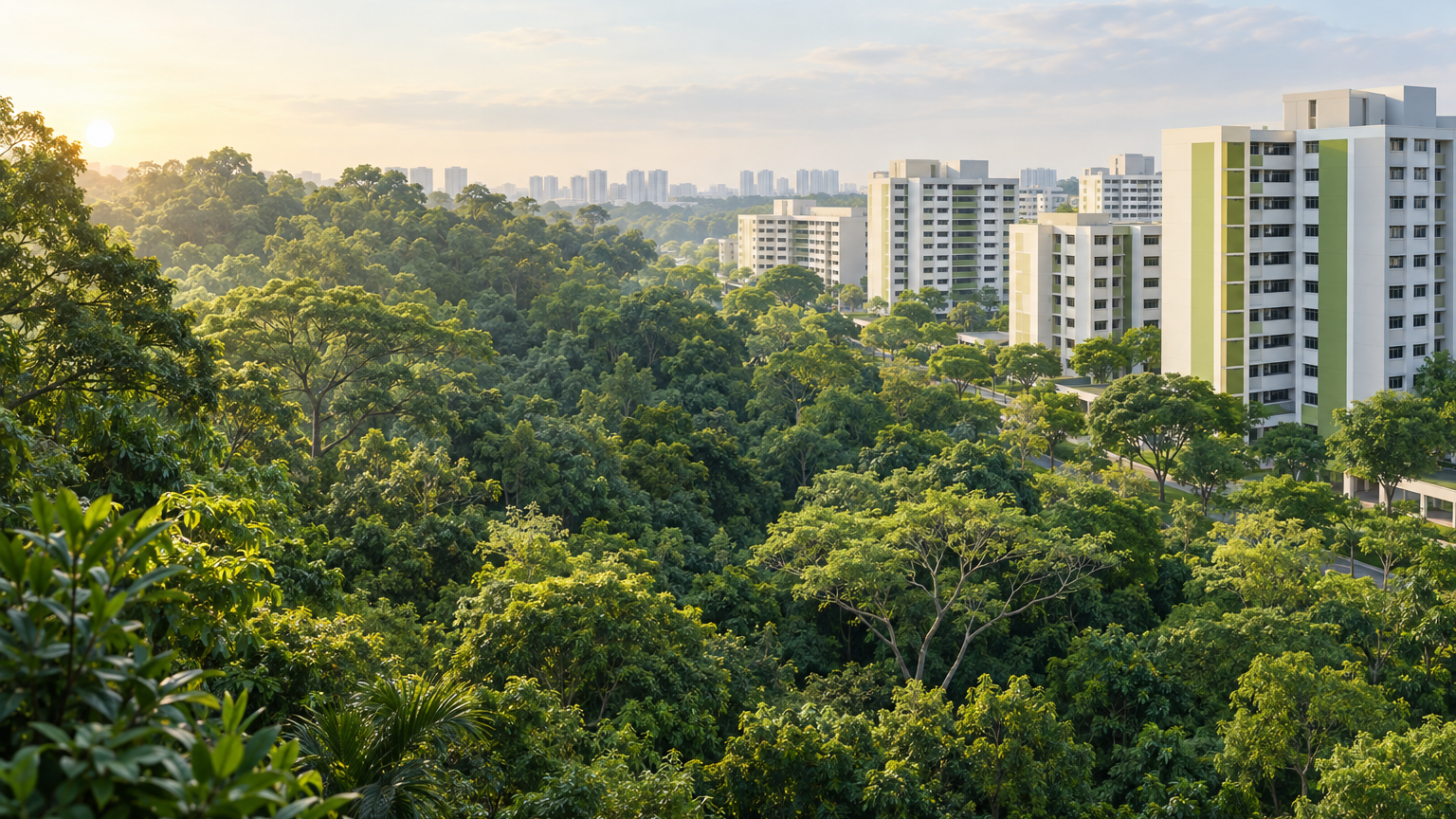
HDB’s revised housing plans for Maju Forest and Gillman Barracks would retain about 6 hectares more greenery in all, calculated from the agency’s area estimates reported on 28 October 2026. HDB said the revisions would reduce the planned housing yield by about 1,200 homes, leaving an estimated 11,000 across both sites over the next decade.
For households considering these locations for a future HDB flat, the scale and timing belong together. The public-housing component of the reported plans amounts to an estimated 9,500 homes, calculated from the two sites’ figures. HDB described the sites as part of the pipeline meeting demand from the 2030s; housing mix and launch dates have yet to be announced. These are prospective neighbourhoods, rather than a current flat-launch offer.
How many of the homes would be public housing?
Maju Forest, at Sunset Way, is now estimated to accommodate about 4,000 public-housing flats. Gillman Barracks is estimated to accommodate about 7,000 homes, of which about 5,500 would be public housing. The combined 11,000 figure therefore covers more than HDB flats alone.
Minister of State for National Development Alvin Tan said the revisions meant about 400 fewer flats at Maju Forest and about 800 fewer homes at Gillman Barracks compared with the initial plans. Together, those reductions account for the roughly 1,200-home cut.
Adding 4,000 and 5,500 puts the estimated public-housing component of the reported plans at 9,500 homes—roughly 86% of all homes across the two sites, using the rounded reported figures. For prospective HDB buyers, that is the more relevant measure of the future public-housing provision, although HDB said the estimates still require assessment during detailed design.
What greenery would remain?
At Maju Forest, the area retained as greenery increases from around 8 hectares to 10 hectares. HDB described the revised figure as about 45% of the entire 23-hectare site, up from about 35% under the original plans. Retaining more greenery in the southern part would create a wider, more connected green area within the site and along the Clementi Nature Corridor, the agency said.
At Gillman Barracks, greenery set aside increases from around 8 hectares to 12 hectares. Here, the reported 60% refers to the 20 hectares of existing greenery, not the whole development site. The earlier proportion was about 40% of that existing greenery.
The percentages therefore answer different questions. Maju Forest’s 45% measures greenery against the whole site; Gillman Barracks’ 60% measures it against existing greenery. The simpler before-and-after comparison is the additional area retained: about 2 hectares at Maju Forest and 4 hectares at Gillman Barracks, calculated from the reported estimates.
Location matters too. HDB said more forest around the Gillman Barracks hillock would remain, creating a greener frontage towards Telok Blangah Street 31. A wider north–south ecological corridor along Lock Road and Malan Road is intended to strengthen connections within the Southern Ridges and towards Berlayar Creek and Labrador Nature Reserve.
What people asked planners to reconsider
The consultation ran from 10 July to 6 August 2026. HDB received about 7,200 submissions concerning Maju Forest and 2,300 concerning Gillman Barracks. Authorities separately engaged about 1,000 stakeholders, including nature groups, youths, academics and planning professionals; nearby residents also took part in grassroots-organised sessions.
Concerns included habitat loss, biodiversity and connections between green areas. Respondents suggested using previously developed land, making more intensive use of existing developed areas, or reducing the proposed development footprints. At Gillman Barracks, respondents also highlighted heritage, cultural and community value.
Alongside those concerns was another family consideration: some respondents recognised the need for homes that would let families live closer together. HDB said the review drew on environmental studies as well as public feedback, weighing ecological needs against housing and other land uses.
HDB also said agencies had assessed alternative sites, including locations suggested by residents. Some were already planned for housing; others remained needed for existing uses or would not become available within the required timeframe. The choice was therefore not simply between developing these sites and using an immediately available substitute.
When could this become a real moving option?
The next stage is detailed planning and design, which HDB said would take place over the next few years. The agency described the sites as part of the broader housing pipeline meeting demand from the 2030s, with housing mix and launch dates to be announced when ready.