Upper Boon Keng four-room resale sets S$1.32m Kallang/Whampoa record
The Block 8A sale came from the 19–21 storey band. Two nearby transactions help sellers judge how closely the record fits their own flat.
Published 2026-11-06 · 5 min read
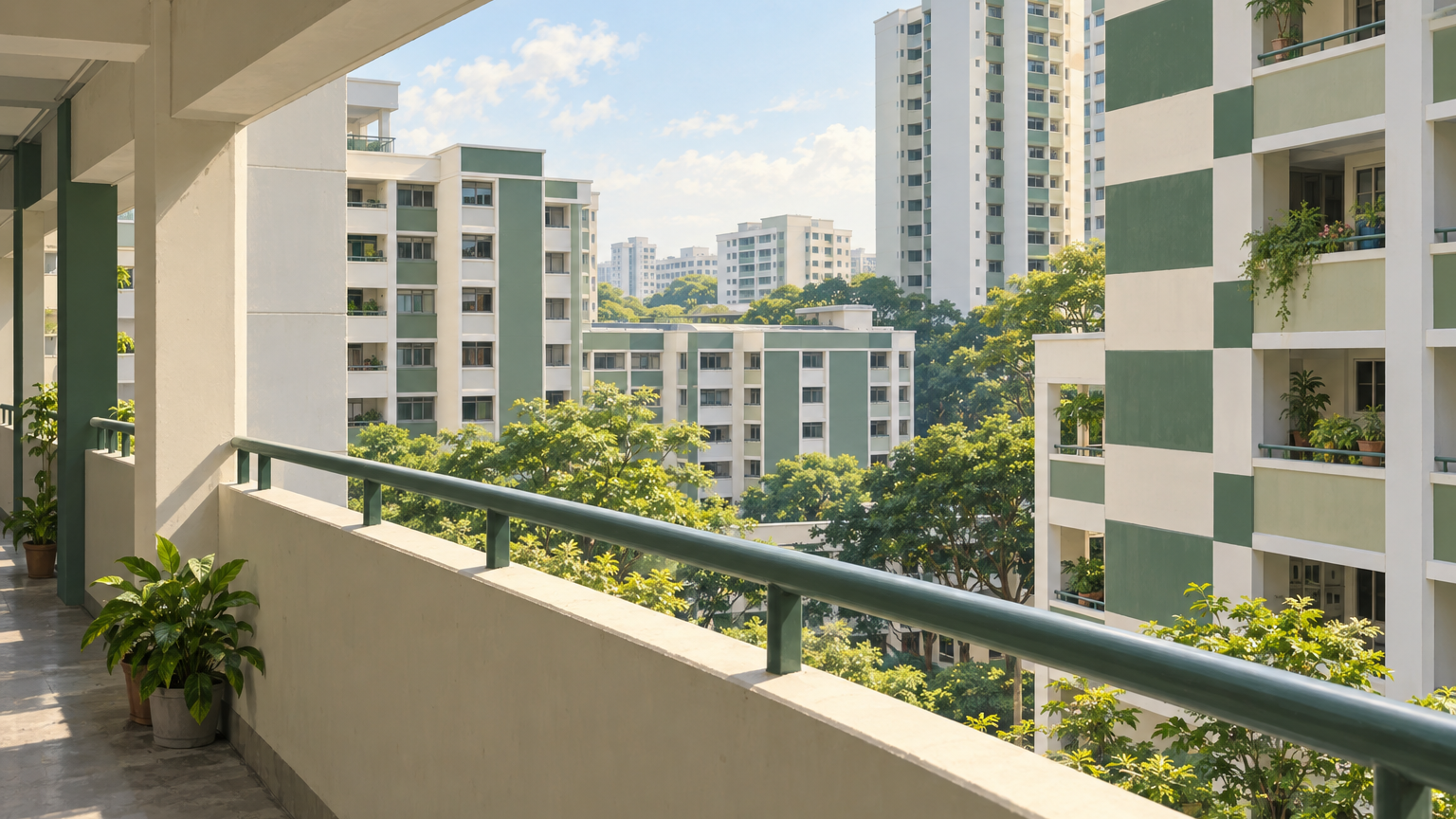
A 98 sq m four-room flat at Block 8A, Upper Boon Keng Road has recorded a S$1.32 million resale in November 2026, placing it first among 2,790 Kallang/Whampoa four-room records since January 2017 in the captured HDB price-ranked query. The flat sits in the 19–21 storey band—below the 28–30 storey band of the next-ranked sale at neighbouring Block 8B.
For owners choosing an asking price, the useful detail is how close those two results are: the new record exceeds the October 2023 Block 8B transaction by S$19,112, or about 1.47%, calculated from the registered prices. Both flats measure 98 sq m. That gives sellers a concrete local comparison, but the different registration months and remaining leases still matter when deciding how much weight to give it.
What the record actually covers
The November entry is classified as a four-room Premium Apartment, with a lease commencing in 2017 and 89 years 9 months remaining. Its record position applies to the Kallang/Whampoa four-room records returned by this query, which covers registrations since January 2017. It is not a claim about every flat type or an all-time ranking extending before that period.
The storey detail also needs care. HDB records these transactions in three-storey bands, rather than identifying their exact floors. The evidence therefore supports a comparison between the 19–21 and 28–30 bands—not a claim that the new record flat is exactly nine floors lower.
For a seller, this result is best treated as an achieved-price reference for a particular transaction. The practical question is not simply whether your flat is nearby, but which parts of its profile match this sale closely enough to make the comparison useful.
Two comparisons, each useful for a different reason
The Block 8B sale offers a same-size comparison. The August 2026 Block 8A sale offers a more recent, same-block comparison. Keeping their details together makes the trade-off easier to see.
| Registered month and block | Resale price | Floor area | Storey band | Remaining lease |
|---|---|---|---|---|
| November 2026, Block 8A | S$1,320,000 | 98 sq m | 19–21 | 89 years 9 months |
| October 2023, Block 8B | S$1,300,888 | 98 sq m | 28–30 | 92 years 10 months |
| August 2026, Block 8A | S$1,268,888 | 95 sq m | 22–24 | 89 years 11 months |
All three are recorded as four-room Premium Apartments with leases commencing in 2017. The transaction details above come from the same captured HDB dataset.
Against Block 8B, the new record is S$19,112 higher, despite coming from a lower storey band. But the registrations are more than three years apart, and the Block 8B transaction had three years and one month more remaining lease. This is a comparison of two achieved prices across different dates, not a measurement of the value of height or lease length.
Against the August sale in the same block, the November result is S$51,112 higher, or approximately 4.03%. The November flat is also 3 sq m larger, while its storey band is lower and its remaining lease is two months shorter. Those differences make the August sale useful context without making it an identical substitute.
Choose the comparison before choosing the asking price
For an owner of a 98 sq m flat, the Block 8B transaction answers one useful question: what did another flat of the same size achieve nearby? For an owner in Block 8A, the August transaction answers another: what did a smaller flat in this very block achieve more recently? Neither comparison answers everything on its own.
Our reading is to keep both references in the discussion rather than select whichever produces the highest asking figure. Start with the complete transaction profile—block, area, registered month, storey band and remaining lease—then explain where your own flat matches and where it differs.
That also keeps the arithmetic honest. The S$51,112 gap between the two Block 8A transactions is a total price difference. Dividing it by the extra 3 sq m would not establish what each additional square metre was worth: size changed alongside the month, storey band and remaining lease.
For a Kallang/Whampoa owner outside these two blocks, the record is a wider town reference rather than an automatic starting price. Its strongest use is to sharpen the comparison you ask for, not to replace a comparison with a headline.
A new benchmark, not a selling deadline
The November registration adds a new top achieved price to this bounded set of Kallang/Whampoa four-room records. It also shows why a seller should retain the details beneath the ranking: the highest total came from a lower storey band than either of the two comparison sales examined here.
For the decision to sell now or wait, these three transactions provide price references, not a forecast. An achieved record and your proposed asking price serve different purposes: one describes a registered result; the other starts a conversation about your particular flat.
The clearest takeaway is therefore narrower than “ask S$1.32 million”. Use the new result to make your pricing discussion more specific. A persuasive asking price needs an explanation of why the comparison fits—not merely a nearby record to point at.